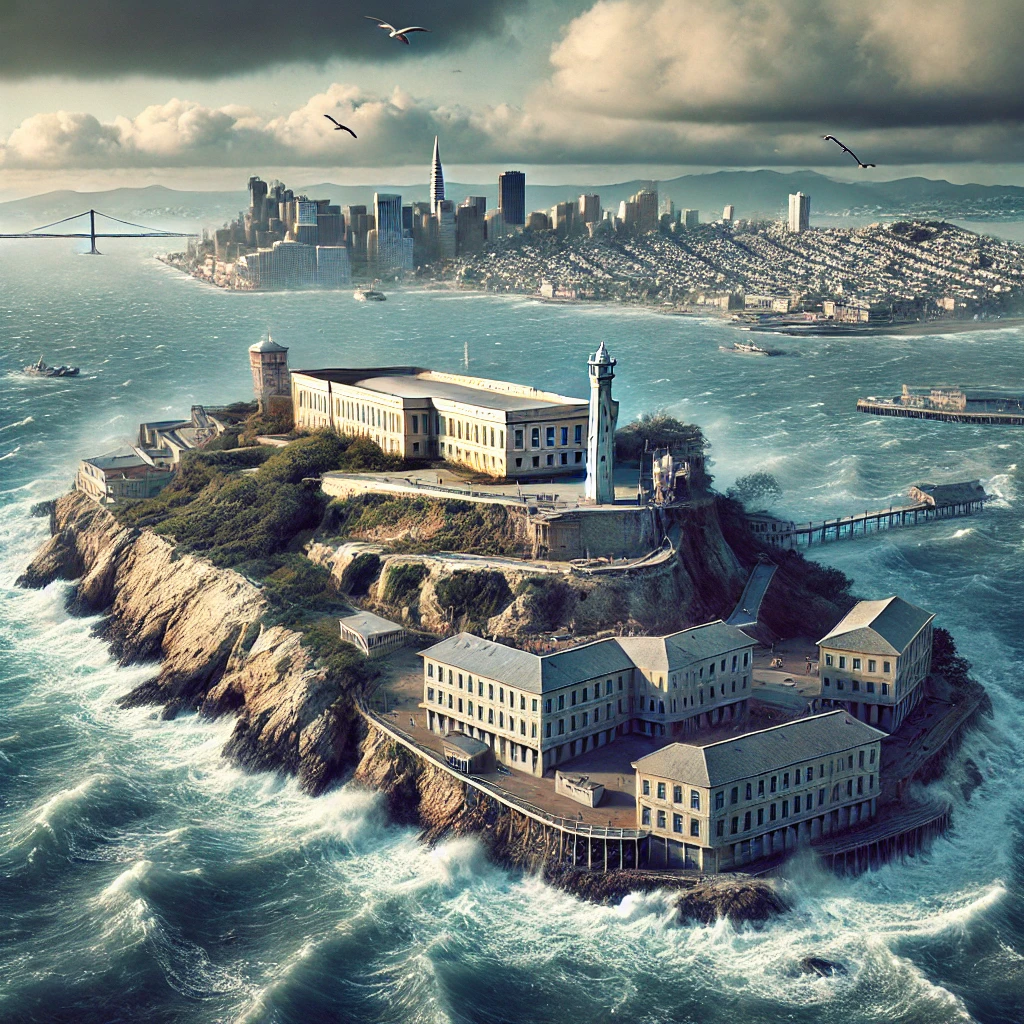
Alcatraz is a small island located in San Francisco Bay, about 1.25 miles (2 km) offshore from San Francisco, California. It’s best known for its time as a federal prison, but its history is much broader and more layered.
Here’s a breakdown of its key historical phases:
🏝 1. Early History
- Originally inhabited by Native Americans, who viewed it as a place of isolation or spiritual significance.
- Named “La Isla de los Alcatraces” (Island of the Pelicans) by Spanish explorers in the 1770s.
🏰 2. Military Fortification (1850s–1907)
- In 1850, U.S. President Millard Fillmore ordered Alcatraz to be set aside for military use.
- It became part of a coastal defense network, with cannons and a military fortress.
- It also housed a military prison, especially during the Civil War.
🚔 3. Federal Penitentiary (1934–1963)
- Alcatraz was converted into a maximum-security federal prison.
- Known for its harsh conditions and reputation for being escape-proof due to the cold, fast currents of San Francisco Bay.
- Famous inmates included:
- Al Capone
- George “Machine Gun” Kelly
- Robert Stroud, the “Birdman of Alcatraz”
- Despite its reputation, 14 escape attempts were made by 36 inmates. The most famous was in 1962, involving Frank Morris and the Anglin brothers — their fate remains a mystery.
🪧 4. Native American Occupation (1969–1971)
- A group of Native American activists occupied Alcatraz, claiming it under the Treaty of Fort Laramie.
- It became a symbol of the Red Power movement and drew national attention to Native American issues.
🏛 5. Today: National Historic Site
- Alcatraz is now managed by the National Park Service.
- It’s a popular tourist attraction, with daily tours that include the old prison cells, guard towers, and museum exhibits.
- It’s also home to bird colonies, gardens, and historical buildings.